Namibia without fences: from Etosha’s waterholes to the wild Skeleton Coast.
JOURNEY
Windhoek > Okahandja > Mt. Etjo and Okonjati Nature Reserve > Otjiwarongo > Etosha National Park
(Okaukuejo) > Kamanjab > Palmwag > Skeleton Coast > Cape Cross > Spitzkoppe > Swakopmund >
Walvis Bay > Windhoek
Overview
Wild Namibia Unfenced takes you from Windhoek north to Mt. Etjo and the Okonjati Nature Reserve, then on to Etosha National Park, where two nights at Okaukuejo and a full day of game drives give you time to watch the waterholes and travel on to Halali. From there the landscape opens up as you head to Palmwag, then out to the Skeleton Coast and Cape Cross, with its Cape fur seal colony. You camp beneath the granite peaks of Spitzkoppe before a comfortable night at Hotel A La Mer in Swakopmund, then return to Windhoek via Walvis Bay. Stays are in well-run camps, with full board throughout the bush and a hotel finale for the last night.
Highlights
- Game drives in Etosha National Park, based at Okaukuejo
- Skeleton Coast views and the Cape Cross seal colony
- A night at Palmwag, in wild, remote country
- The Skeleton Coast and the Cape fur seals at Cape Cross
- Camping at Spitzkoppe's dramatic granite peaks
- A hotel night in Swakopmund and a stop at Walvis Bay before returning to Windhoek
Itinerary
Mt Etjo
Route: Windhoek > Okahandja > Mt Etjo
The journey begins with a collection from your Windhoek accommodation and a short pre-departure meeting.
Heading north, the first stop is Okahandja, home to Namibia's largest wood carving market, where craftsmen from across the country sell items large and small. It is a chance to take home a truly Namibian souvenir while supporting local artists and communities.
The group then continues to the Mt. Etjo campsite, next to the private Okonjati Game Reserve. After making camp and preparing lunch, you visit the Moroccan-style lodge with its terracotta buildings, palms, lawns and pool, and its lake with a small population of hippopotamus. An open vehicle game drive with a local guide explores the 36,000-hectare reserve, with termite mounds, thorn scrub, mopani trees and open savanna.
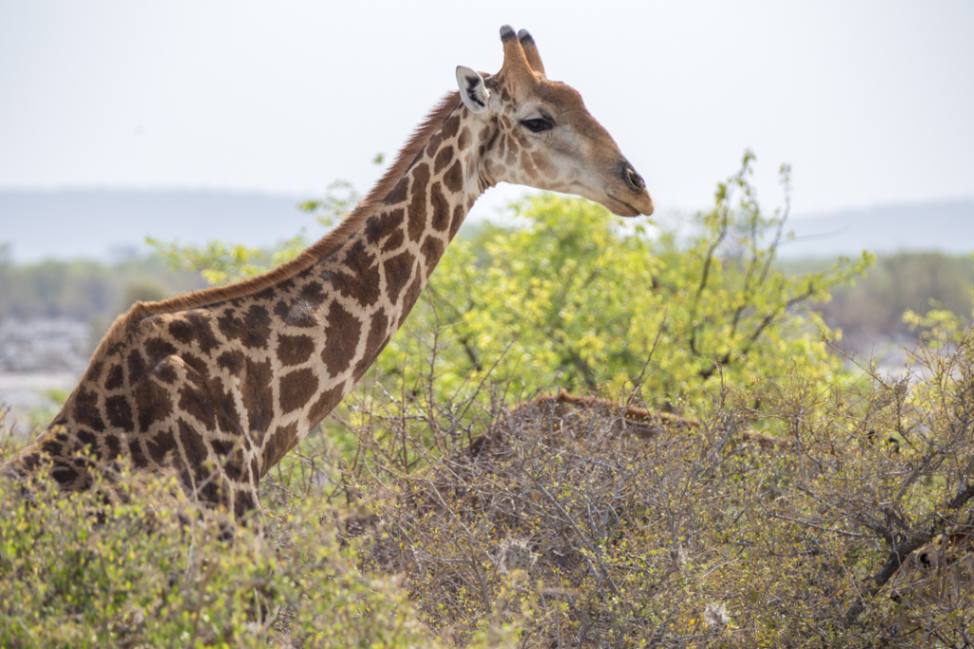
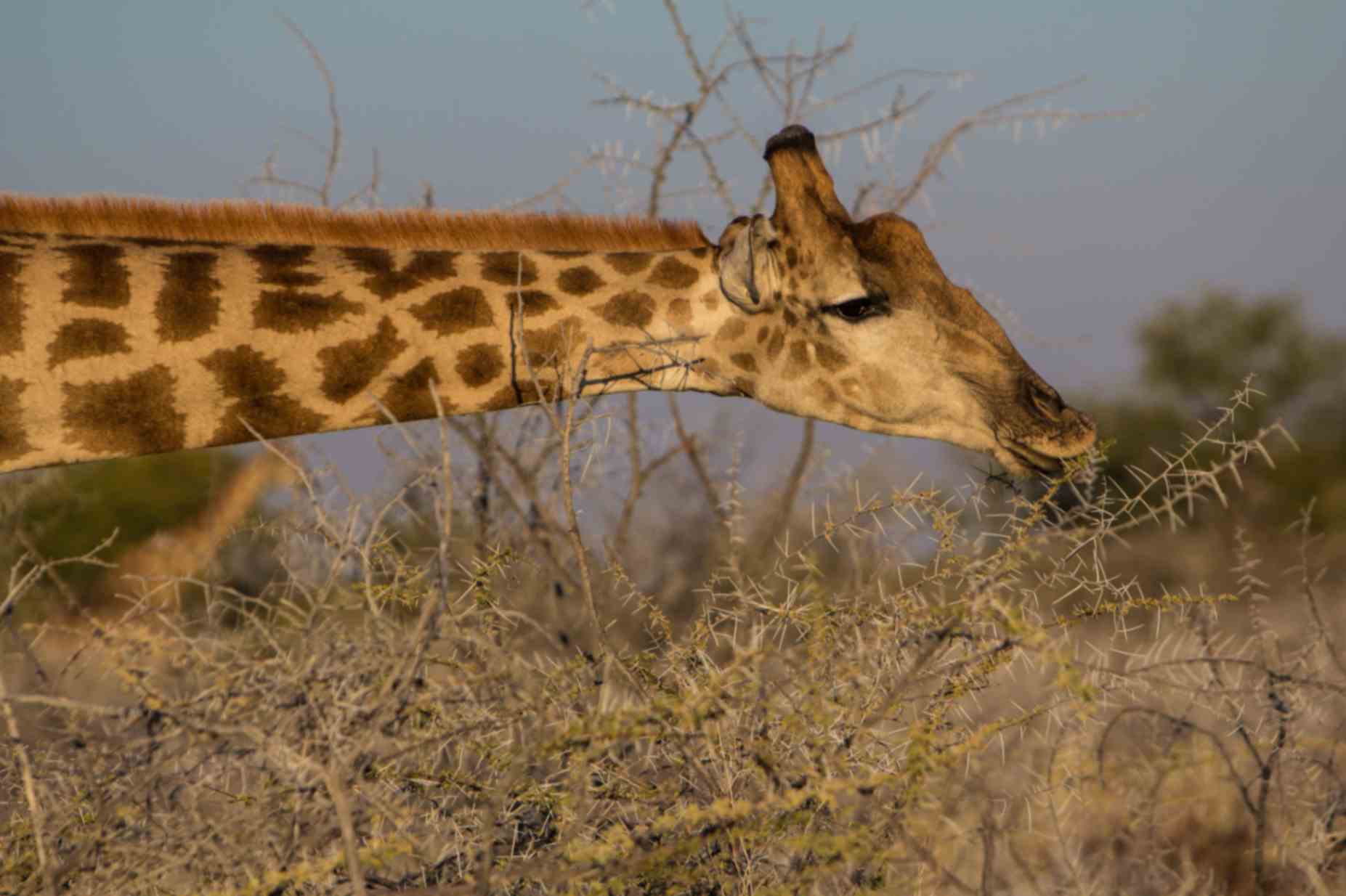
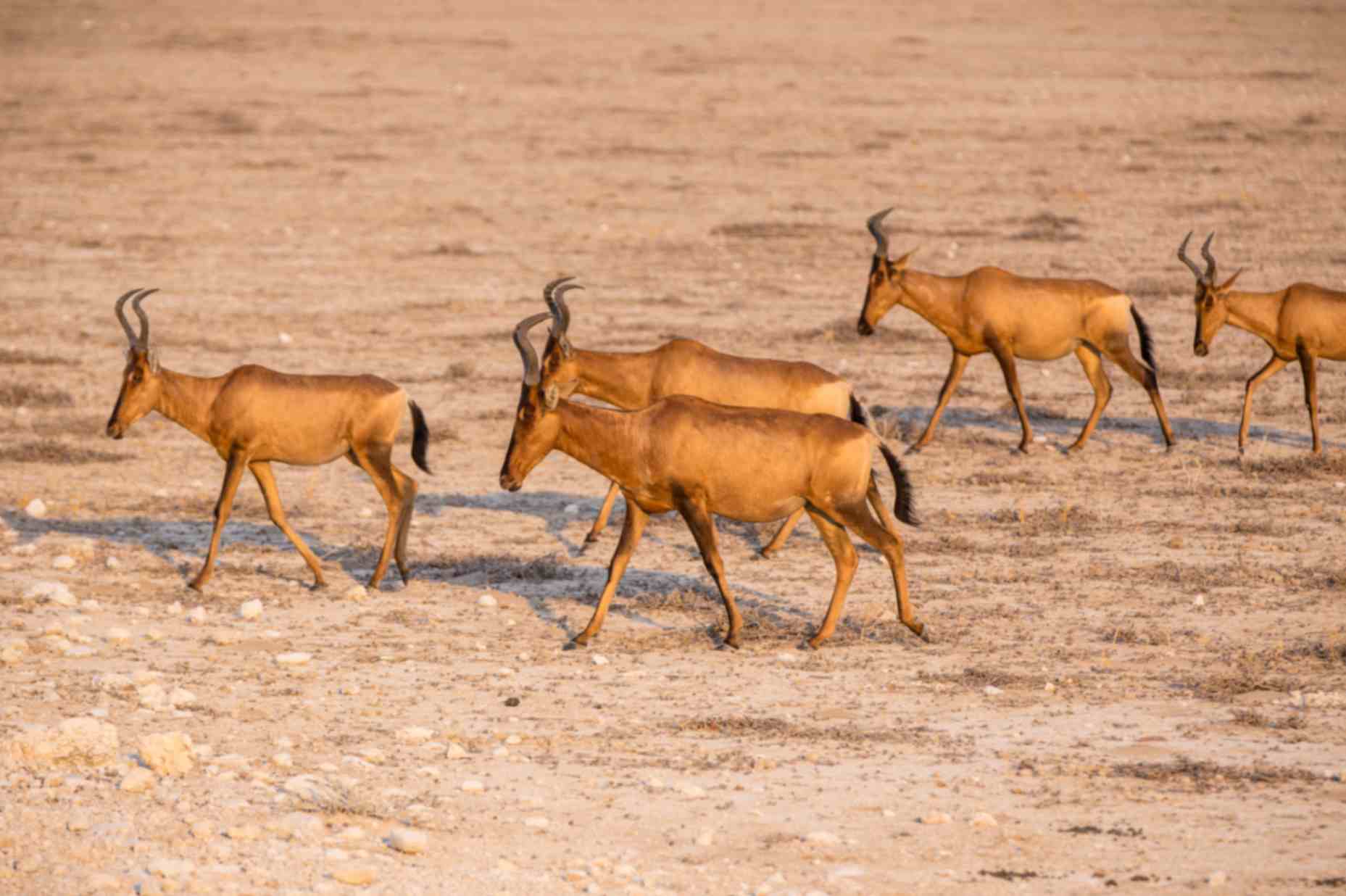
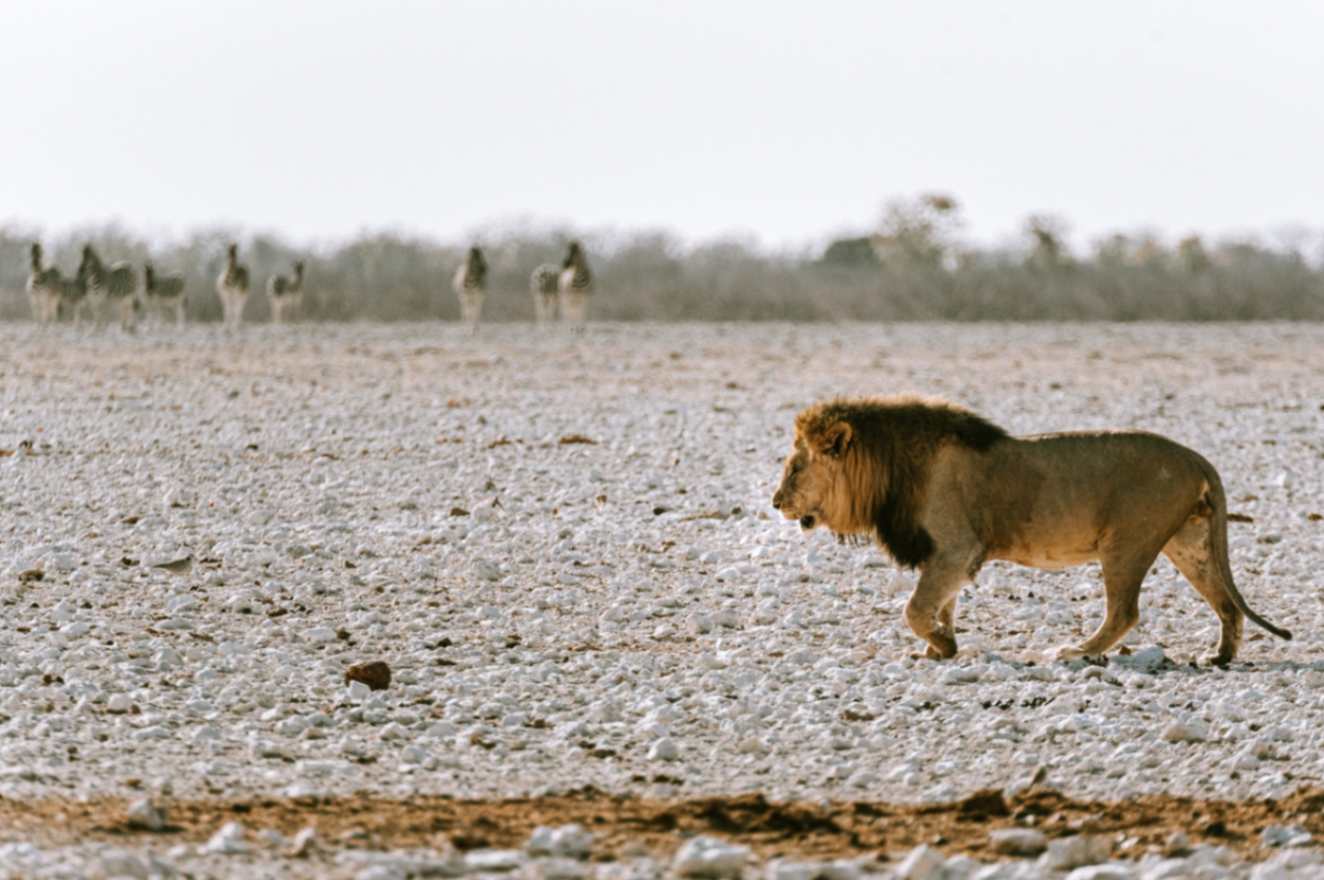
Elephant, rhino and giraffe are hoped for, alongside springbok, wildebeest, impala, kudu, warthog, steenbok and Damara dik dik. Refreshments are enjoyed around sunset.
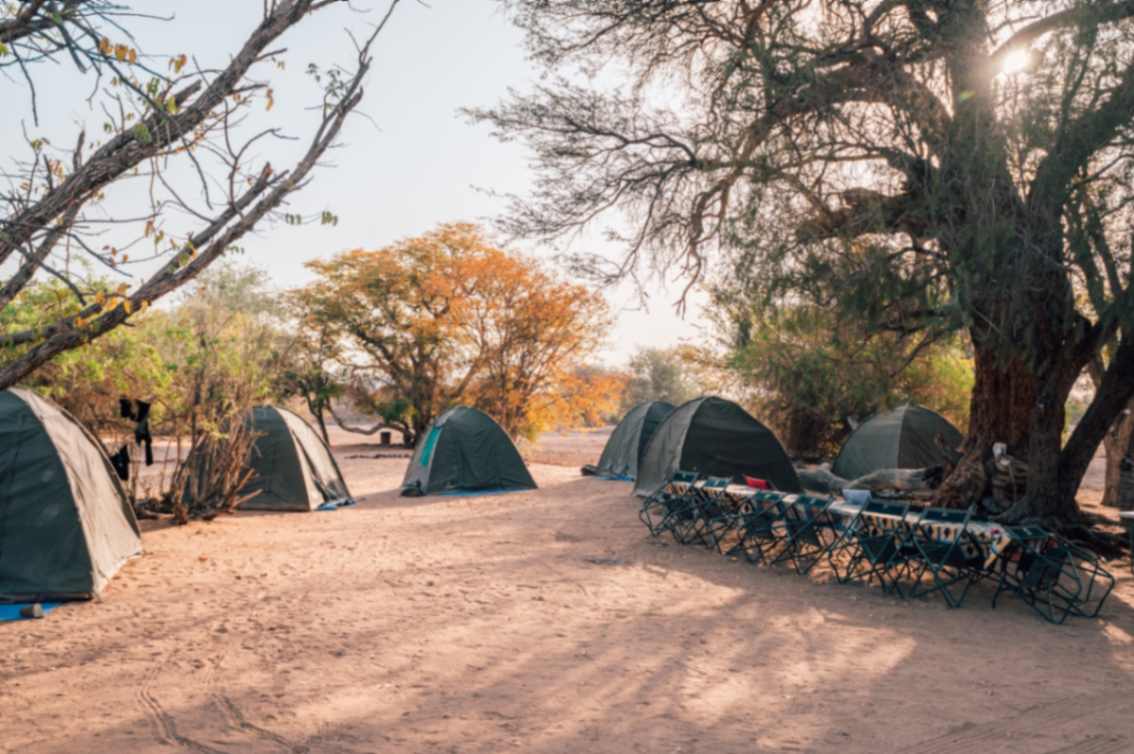
Dinner is cooked by your guide over an open fire. Afterwards you return to the lodge to watch the resident lions feed from a secure hide, before settling into your first night under canvas in twin share tents with shared ablutions.
Key activities included
- Visit to Okahandja wood carving market
- Lodge grounds and pool at Mt. Etjo
- Game drive in Okonjati Nature Reserve
- Evening lion viewing from a hide
Overnight: Mt Etjo campsite
Etosha National Park
Route: Mt. Etjo > Otjiwarongo > Anderson Gate > Okaukuejo
After breakfast the journey continues north towards Etosha National Park, with a short stop in Otjiwarongo for
essential supplies. The route then leads to Etosha's main camp at Okaukuejo.
The park is introduced with a short game drive from Anderson Gate to Okaukuejo Camp, with a good chance
of spotting big game from the start. Etosha covers just over 22,000 square km and is home to 114 mammal
species, 350 bird species, 110 reptile species and, somewhat bizarrely, one species of fish. After setting up
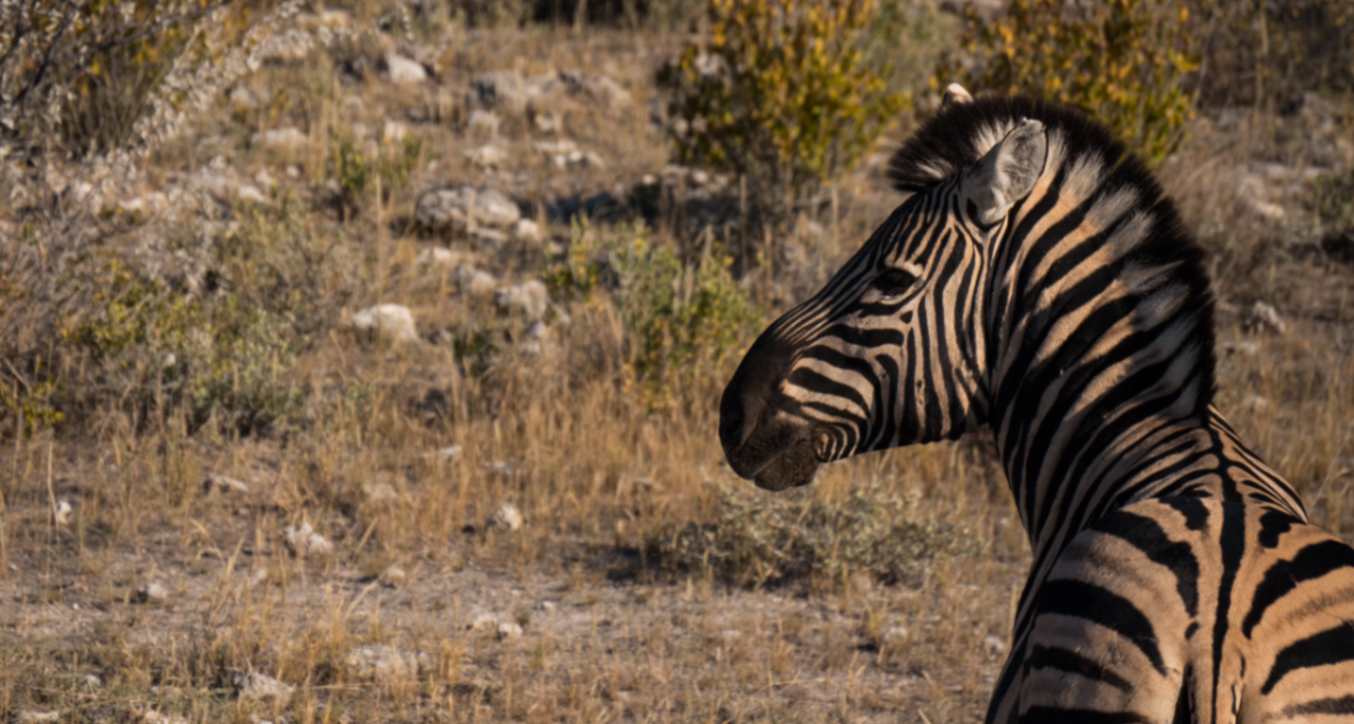
camp, you head out again in search of elephant, rhino, giraffe and big cats, as well as antelope, gazelle,
zebra and the park's spectacular birdlife.
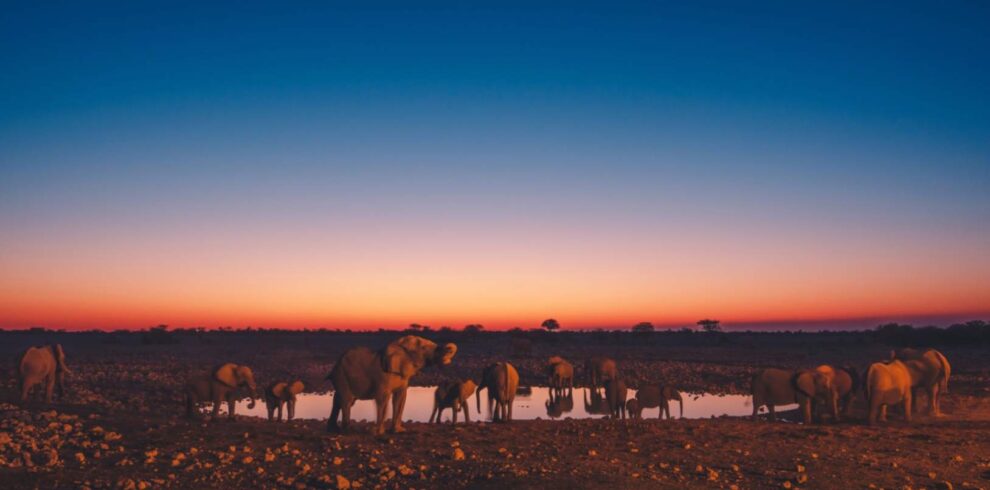
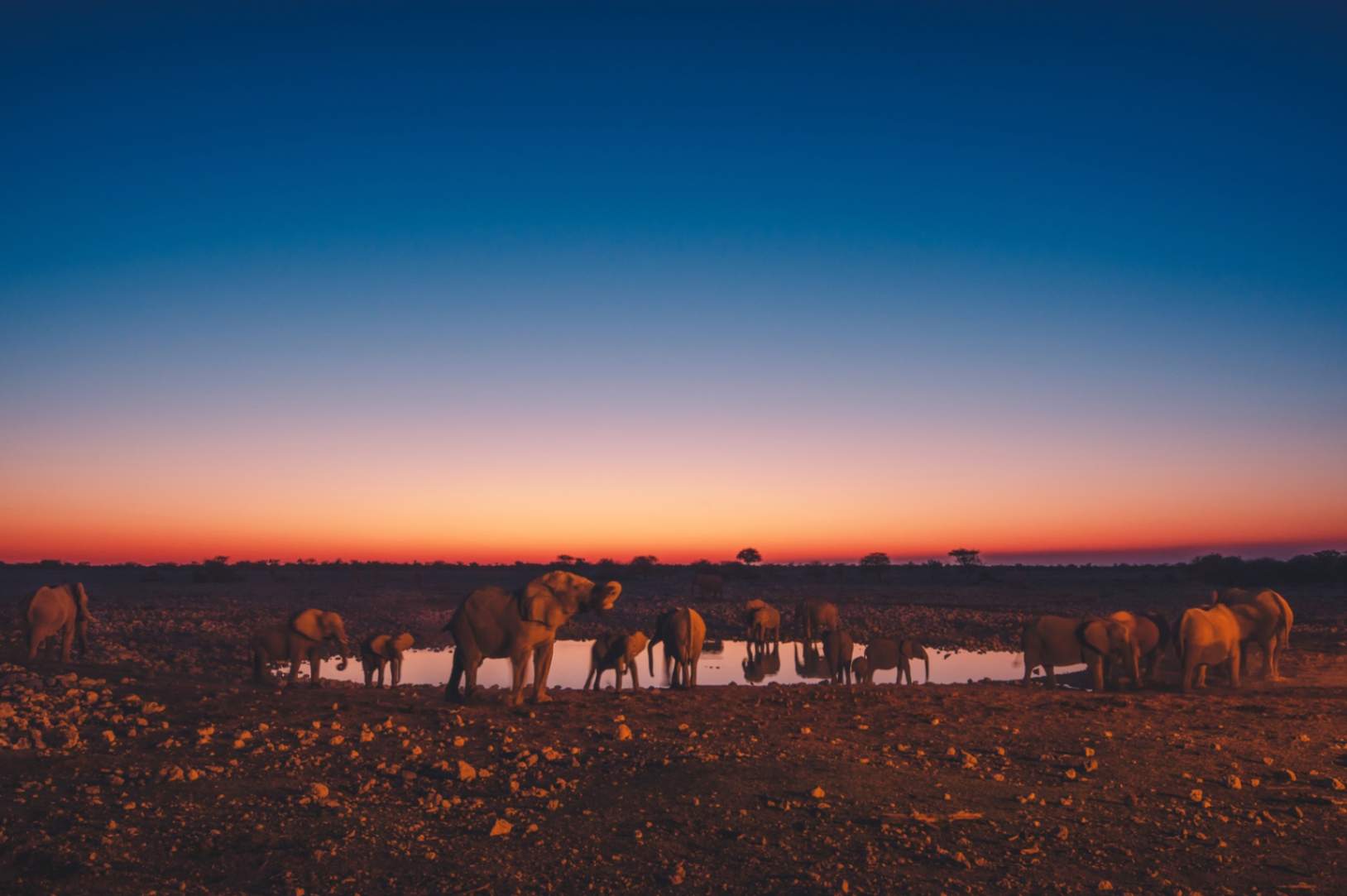
All visitors must be back in camp at sunset, but the game show continues at Okaukuejo's famous floodlit
waterhole, a short walk from the campsite. It offers a chance to see Etosha's big cats, elephants and smaller game, and is the best opportunity for getting close to black rhino. The night is spent in twin share tents with shared ablutions.
Key activities included
- Game drive from Anderson Gate to Okaukuejo
- Afternoon game drive in Etosha
- Floodlit waterhole at Okaukuejo
Etosha National Park
Route: Okaukuejo > Halali > Etosha Pan > Okaukuejo
A full day is spent exploring Etosha. After a quick coffee and snack, you set out as the park gates open at sunrise, meeting a local guide at the gate to explore the park with your own guide on an open game viewer.
Early morning is usually productive and a good time to catch big cats returning from the hunt.
Water is scarce in this desert landscape, so the game drive takes in as many natural and man-made waterholes as possible, hoping the animals come to drink. Breakfast is taken at a designated picnic area before continuing to Halali camp, named after a hunting bugle refrain signifying that the hunt is over. Lunch is at Halali, where there is a small shop with basic merchandise and souvenirs, a pool for a swim and the camp waterhole, before heading out for the afternoon drive.
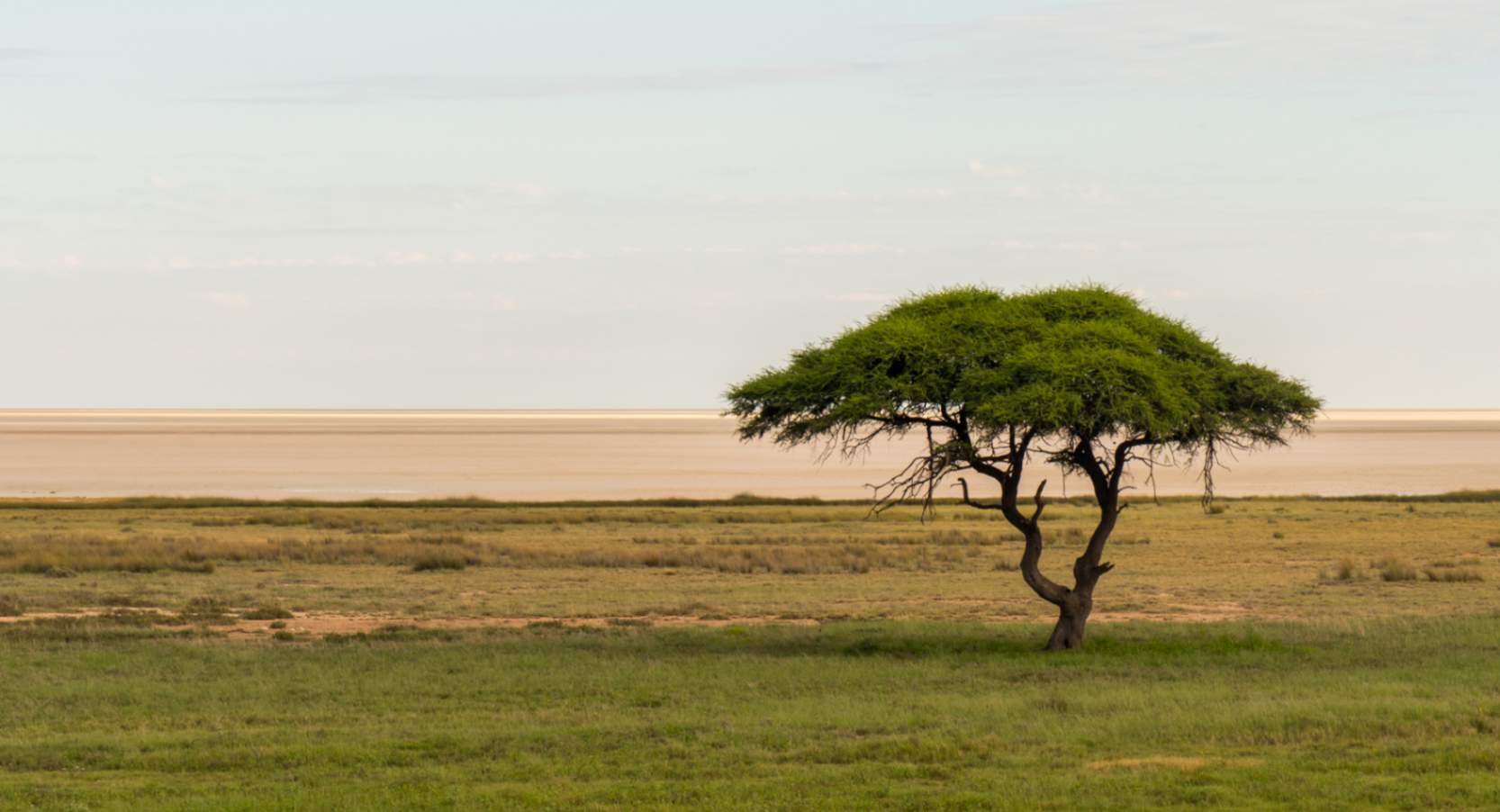
On the way back, a stop at the Etosha Pan shows over 4,700 square km of dazzling white mineral pan, so big it can be seen from space. You aim to reach Okaukuejo before sunset for the best hour at the waterhole, and spend a second night in twin share tents with shared ablutions.
Route: Okaukuejo > Otjikandero Himba Village > Kamanjab > Grootberg Pass > Palmwag
After an early breakfast you game drive your way out of Etosha and back to the main road. The first stop is a cultural visit to the Otjikandero Himba Village near Kamanjab. The Himba traditionally live in the remote far north of Namibia, and many have kept their traditions to this day. Otjikandero is a living village where people reside permanently and largely follow traditional culture. The visit is guided, and you are encouraged to take photos and ask questions.
After a short stop in Kamanjab, the route turns west towards the Etendeka Mountains and the Grootberg Pass. Etendeka means 'flat top', and many of the mountains here have table-tops. The terrain is covered in small uniform boulders, Etendeka basalts, a legacy of the break-up of Gondwanaland around 180 million years ago, and the same rocks are found in Brazil.
Palmwag lies beside the Uniab River under makalani palms, which often shelter Namibia's unique desert-adapted elephants. They sometimes come close to camp and have been known to drink from the swimming pools. You arrive in the late afternoon, set up camp and enjoy a sundowner, hoping to see the resident elephant herds. Accommodation is twin share tents with shared ablutions.
Key activities included
- Guided visit to Otjikandero Himba Village
- Scenic drive through the Etendeka Mountains and Grootberg Pass
- Sundowner at Palmwag
Skeleton Coast / Spitzkoppe
Route: Palmwag > Springbokwasser Gate > Toscanini > Ugab River gate > Cape Cross > Spitzkoppe
Having reached the northern limit of the adventure, today you head west to the Atlantic and then south along the coast to Cape Cross and on to Spitzkoppe. The route passes unusual desert vegetation, including the Welwitschia mirabilis, Namibia's national plant, a dwarf tree found only in Namibia and southern Angola, with some specimens over 1,500 years old.
You enter the Skeleton Coast National Park through the Springbokwasser Gate and meet the chilly Atlantic.
Wind, waves and fog banks long drove ships onto these barren beaches. Along the road are remnants of failed 1960s oil and diamond ventures near Toscanini, including a collapsed drilling rig. You exit at the Ugab River crossing with its iconic gates and continue to Cape Cross, one of the world's largest seal colonies, with usually upwards of 100,000 Cape fur seals. The name comes from the crosses erected there, first by Diogo Cão in 1485, and the stop is the smelliest of the safari.
The journey turns inland to the granite peaks of Spitzkoppe, renowned for sunrise, sunset and night photography. After setting up camp you go into the mountains for sunset, then return for dinner.
Accommodation is twin share tents with shared ablutions.
Key activities included
- Welwitschia mirabilis viewing
- Skeleton Coast National Park drive
- Toscanini oil rig stop
- Cape Cross Seal Colony visit
- Sunset at Spitzkoppe
Swakopmund
Route: Spitzkoppe > Henties Bay > Swakopmund
After breakfast and breaking camp, you head back to the coast and south to Swakopmund. The first stop, south of Henties Bay, is the wreck of the fishing trawler Zeila, beached in 2008 while under tow for scrap, lying close to shore and well placed for photos.
Further along the coast road you visit vast lichen fields, among the rarest of their kind in the world. Lichen is a composite of algae and fungi, living together symbiotically, and here it relies on the coastal fog, which occurs up to 250 days a year, for water. It is extremely fragile, growing around 1 millimetre a year, so your guide directs where you may walk.
In Swakopmund there are no tents tonight, and you check into the centrally located Hotel A La Mer in twin share rooms with en-suite bathrooms. Founded in 1892, the town is bordered by the Namib dunes and the Atlantic, with German colonial architecture and a small, walkable centre. Optional activities include scenic flights, skydiving and quad biking, and your guide can help arrange bookings. Lunch and dinner are at your own expense, and your guide can recommend restaurants.
Key activities included
- Zeila shipwreck stop
- Guided visit to the lichen fields
- Free time in Swakopmund
- Optional activities: scenic flights, skydiving, quad biking, sand boarding
Route: Swakopmund > Walvis Bay > Swakopmund > Windhoek
The final day starts at a more leisurely pace, with a lie-in, a big breakfast and time to wander around Swakopmund. There are curio shops, bookshops and a lively café culture with plenty of small eateries.
You then travel with your guide to the port town of Walvis Bay. Its lagoon is an internationally recognised Ramsar wetland, renowned for birdlife and especially its flamingos, usually found within easy photo distance of the shore. Both lesser and greater flamingos gather here because the Atlantic coast is rich in plankton, which they filter from the water with their beaks. They do not breed at Walvis Bay, as the tides are unsuitable for their mud and sand cone nests, and instead fly in great flocks to the Etosha Pan or Botswana's Makgadikgadi Pan when rains fall.
You then return through Swakopmund and take the main tar road back to Windhoek, with a light lunch along the way. On arrival you are dropped at your accommodation within the city limits. It is not recommended to book flights departing this afternoon.
Key activities included
- Free time in Swakopmund
- Visit to Walvis Bay lagoon and flamingos
- Light lunch en route
- Drop-off in Windhoek
Cost
The Cost Includes
- Transport in a custom-built safari vehicle with air-conditioning and charging ports
- Services of a professional English-speaking guide & camp assistant
- 10 nights camping + 1 night's accommodation in twin share rooms with en-suite bathrooms
- Camping equipment (excluding sleeping bag, which can be hired)
- Meals as per itinerary (B - breakfast, L - lunch, D - dinner)
- Tap water
- National Park entry fees
- Game drive at Mt Etjo and Okonjati Nature Reserve
- Half day game drive in Chameleon Safaris vehicle in
- Etosha National Park
- Full-day game drive in Etosha National Park in an open
- game viewer
- Himba Village visit
- Visit to Cape Cross Seal Colony
- Spitzkoppe
- Guided excursion to Sossusvlei including 4x4 shuttle
- Guided tour at Kolmanskop
- Visit to Diaz Point
- Visit to Fish River Canyon viewpoint
- Visit to Quiver Tree Forest
- Return airport transfers to and from Windhoek International Airport
- #
The Cost Excludes
- All drinks
- Snacks between meals
- Optional Activities
- Sleeping bags
- Tips
- Items of personal nature
- Single travellers will be matched with another traveller of the same sex on a twin share basis