Red dunes, wild coasts and star-filled Namibian nights
JOURNEY
Windhoek > Mt Etjo and Okonjati > Etosha National Park (Okaukuejo and Halali) > Palmwag > Spitzkoppe >
Swakopmund > Sesriem and Sossusvlei > Klein Aus Vista > Luderitz and Kolmanskop > Fish River
Canyon > Quiver Tree Forest > Windhoek
Overview
This journey carries you through the full sweep of Namibia, beginning in Windhoek and heading north to the wildlife-rich pans of Etosha, where Okaukuejo and Halali offer superb game viewing. From rugged Palmwag you cross to the Skeleton Coast and Cape Cross seal colony, then sleep beneath the granite domes of Spitzkoppe. Swakopmund brings a welcome night of comfort at Hotel A La Mer, before you head south to the towering red dunes of Sossusvlei and the cool depths of Sesriem Canyon. The adventure finishes with ghostly Kolmanskop near Luderitz, the vast Fish River Canyon and the quirky Quiver Tree Forest. Apart from your Swakopmund hotel stay, nights are spent camping in some of Namibia’s most atmospheric settings, with meals mostly taken full board.
Highlights
- Game drives in Etosha National Park, based at Okaukuejo
- Skeleton Coast views and the Cape Cross seal colony
- A night beneath the granite peaks of Spitzkoppe
- Sunrise among the red dunes of Sossusvlei and Sesriem Canyon
- Exploring the abandoned diamond town of Kolmanskop
- Fish River Canyon and the Quiver Tree Forest
Itinerary
Mt Etjo
Route: Windhoek > Okahandja > Mt Etjo
Guests are collected from their Windhoek accommodation and transferred to the Chameleon headquarters
for a short pre-departure meeting. Heading north, the first stop is Okahandja, home to Namibia's largest wood
carving market, where craftsmen from all over the country showcase their work. It is a chance to buy a truly
Namibian souvenir while supporting local artists and communities.
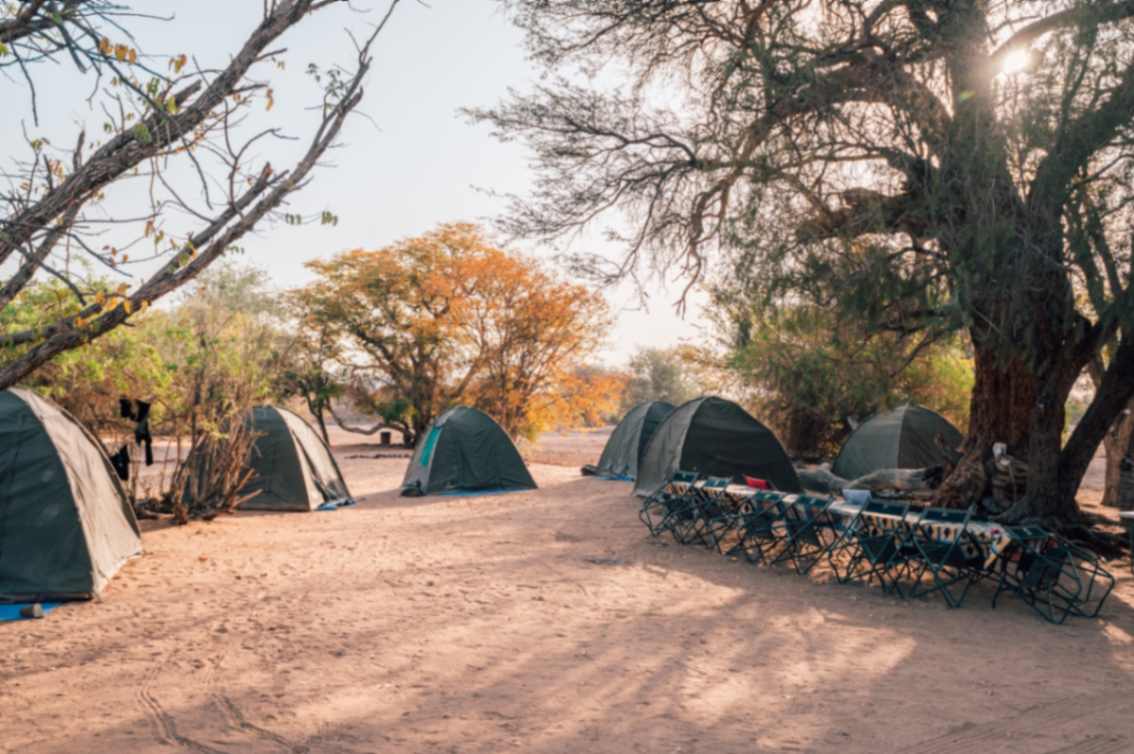
The group continues to the Mt Etjo campsite beside the private Okonjati Game Reserve. After making camp
and preparing lunch, guests visit the Moroccan-style lodge with its terracotta buildings, palms, lawns, pool
and a lake with a small population of hippo. A game drive with a local guide in an open viewing vehicle
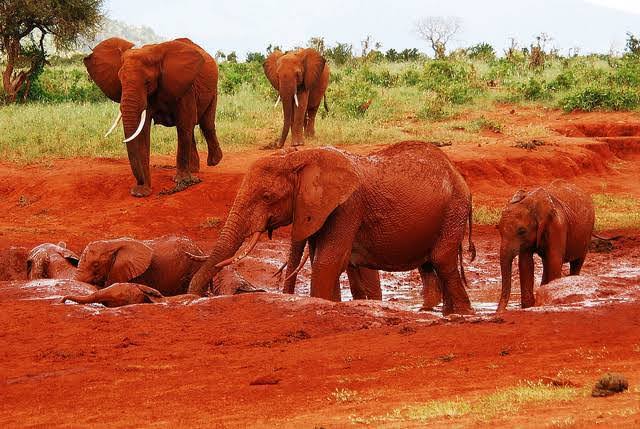
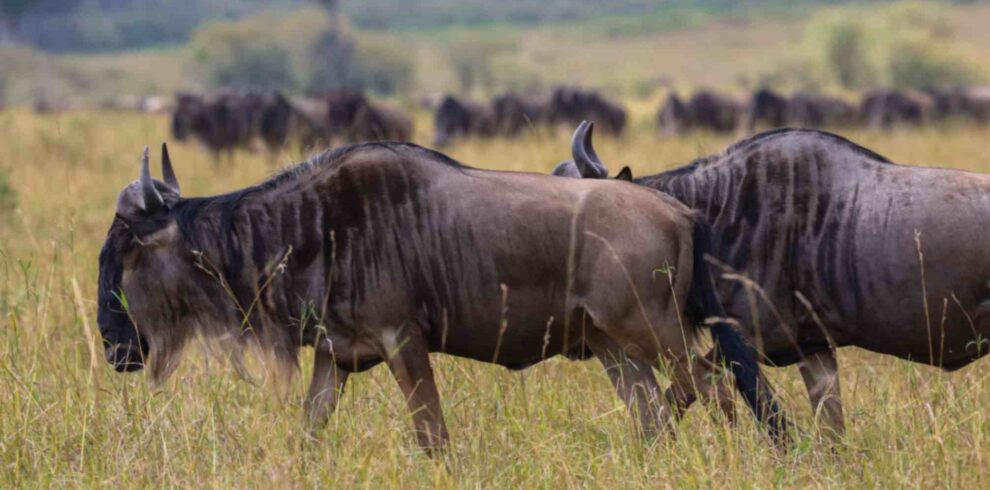
explores the 36,000 hectare reserve, with elephant, rhino, giraffe, springbok, wildebeest, impala, kudu,
warthog and more to look for. Sundowner refreshments are taken in the bush.
Dinner is cooked by the guide over an open fire. Afterwards the group returns to the lodge to watch the
resident lions feed from a secure hide, before settling into the first night under canvas.
Key activities included
- Okahandja wood carving market
- Lodge grounds and pool
- Game drive in Okonjati Game Reserve
- Evening lion viewing from a hide
Overnight: Mt Etjo campsite
Etosha National Park
Route: Mt Etjo > Otjiwarongo > Anderson Gate > Okaukuejo
After breakfast the journey continues north towards Etosha National Park, with a short stop in Otjiwarongo for
essential supplies. The group then reaches Etosha's main camp at Okaukuejo.
The park is introduced with a short game drive between Anderson Gate and Okaukuejo Camp, with a good
chance of spotting big game from the start. Etosha covers just over 22,000 square km and is home to 114
mammal species, 350 bird species and 110 reptile species. After setting up camp, guests head out in search
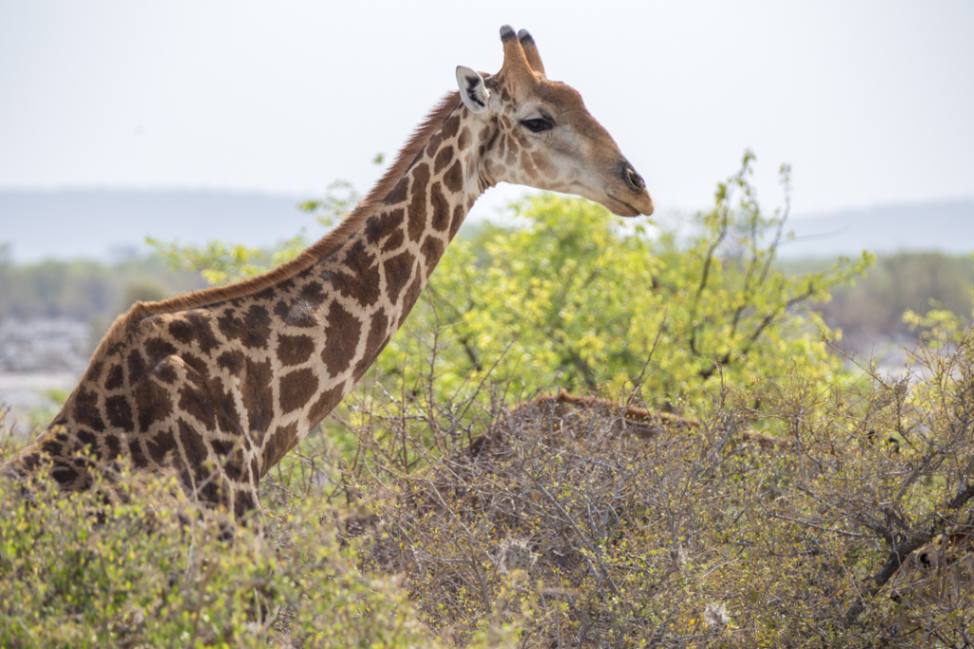
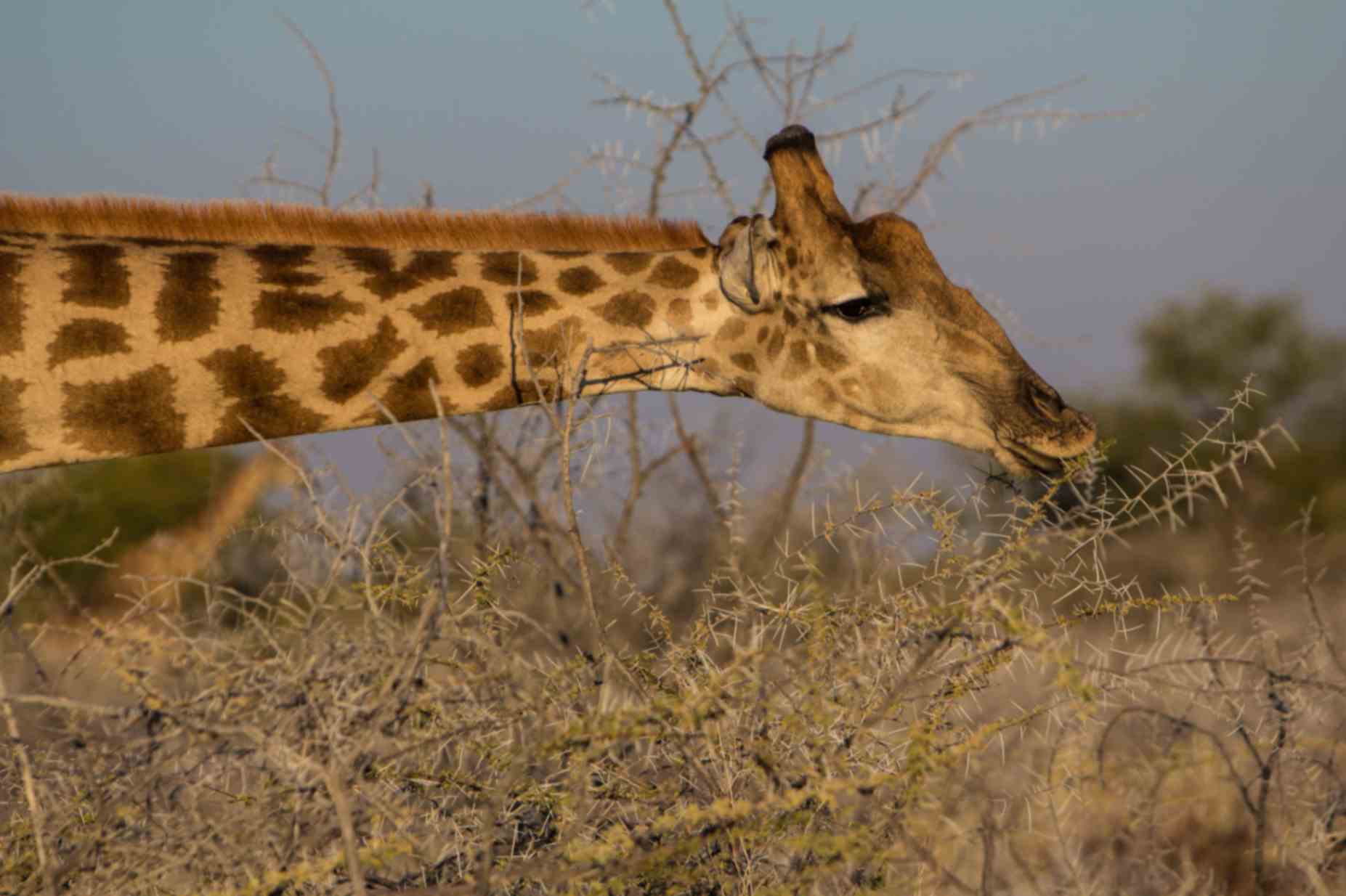
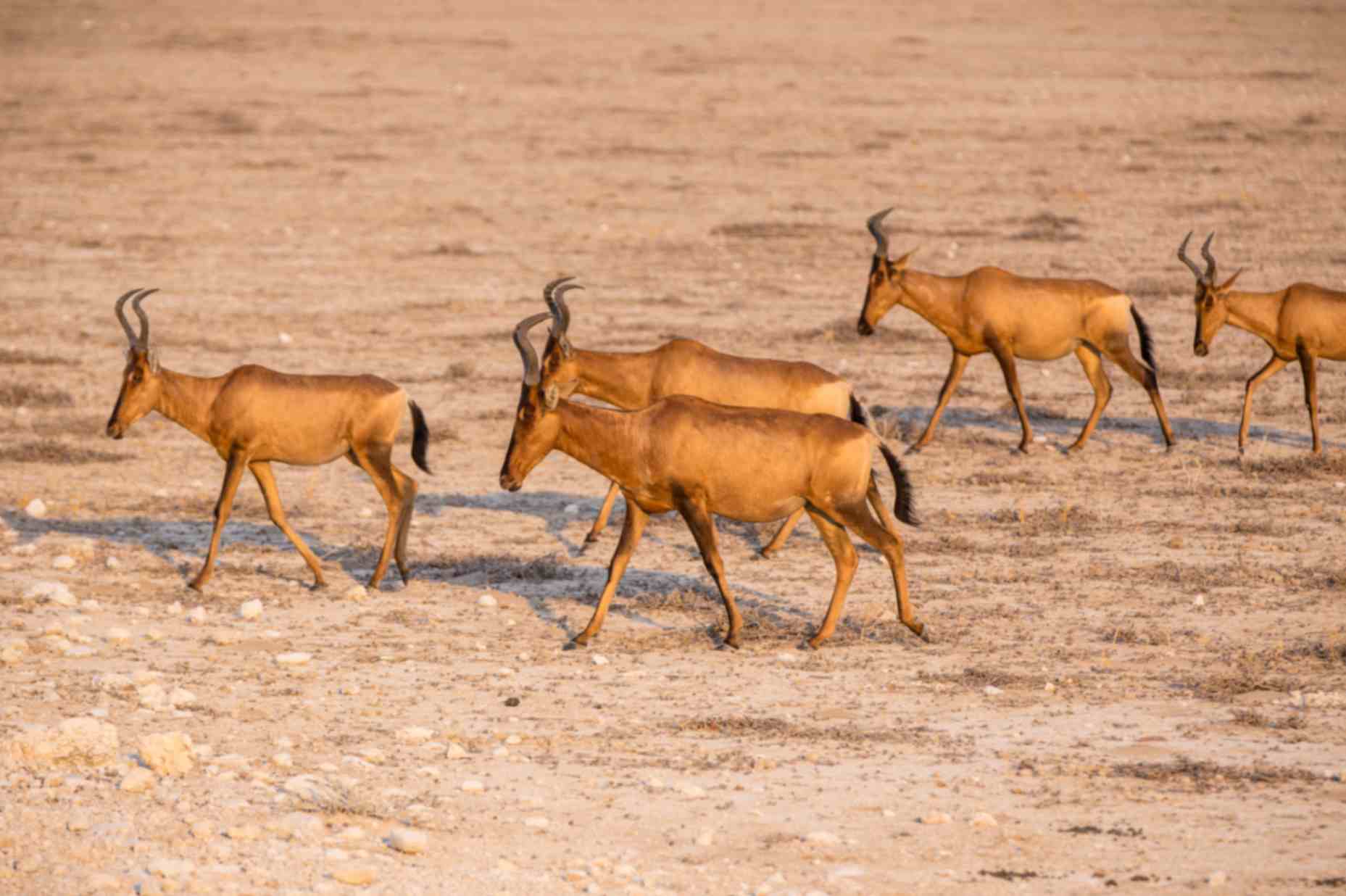
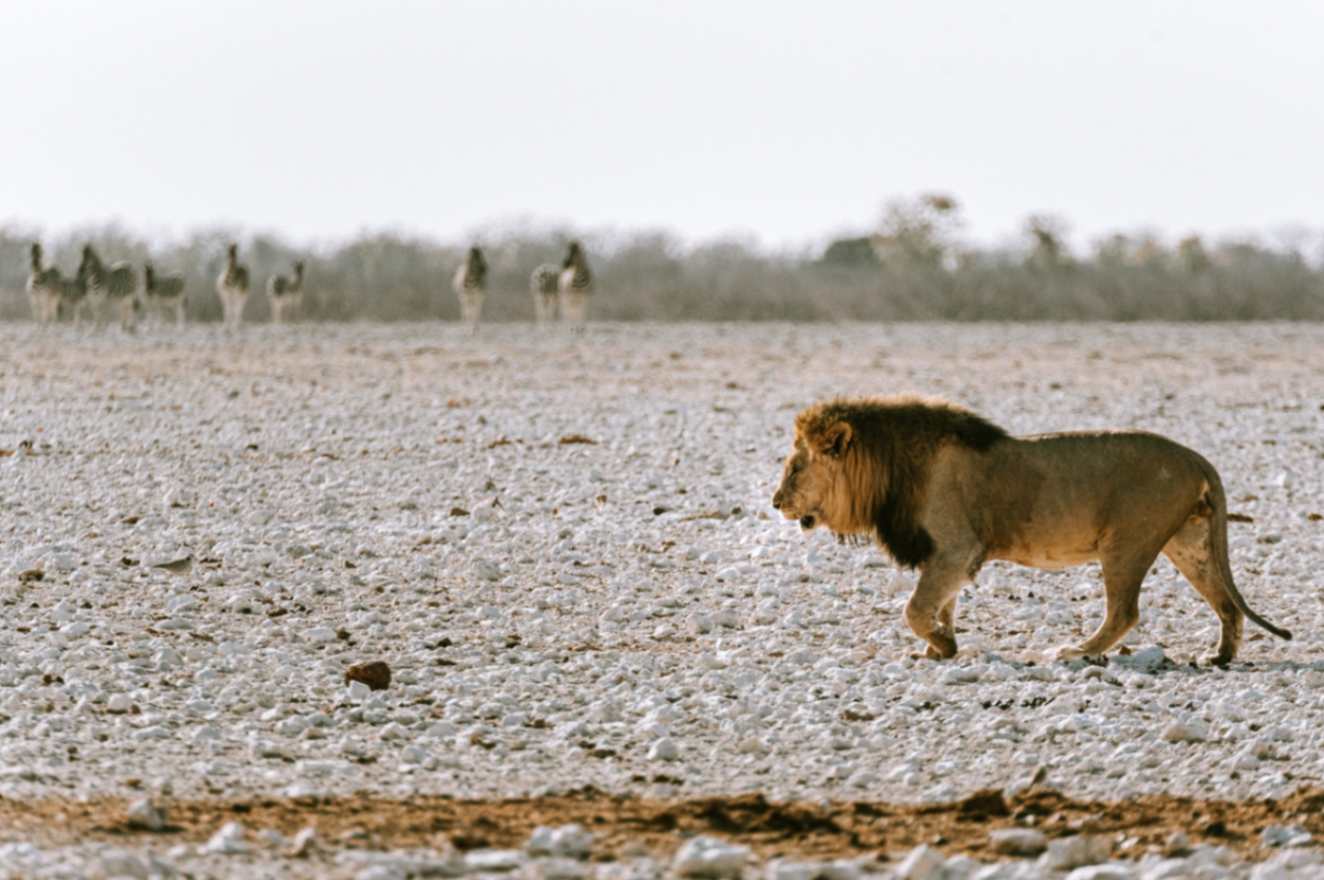
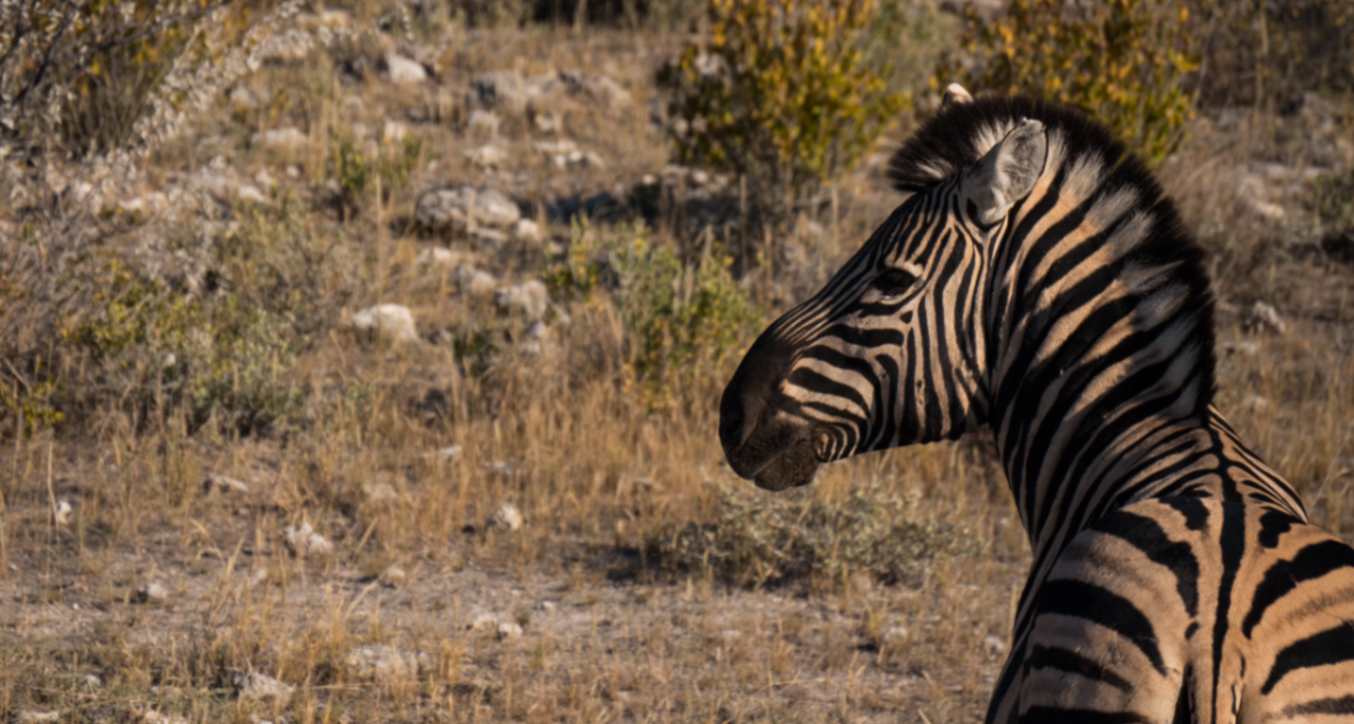
of elephant, rhino, giraffe, big cats, antelope, zebra and birdlife.
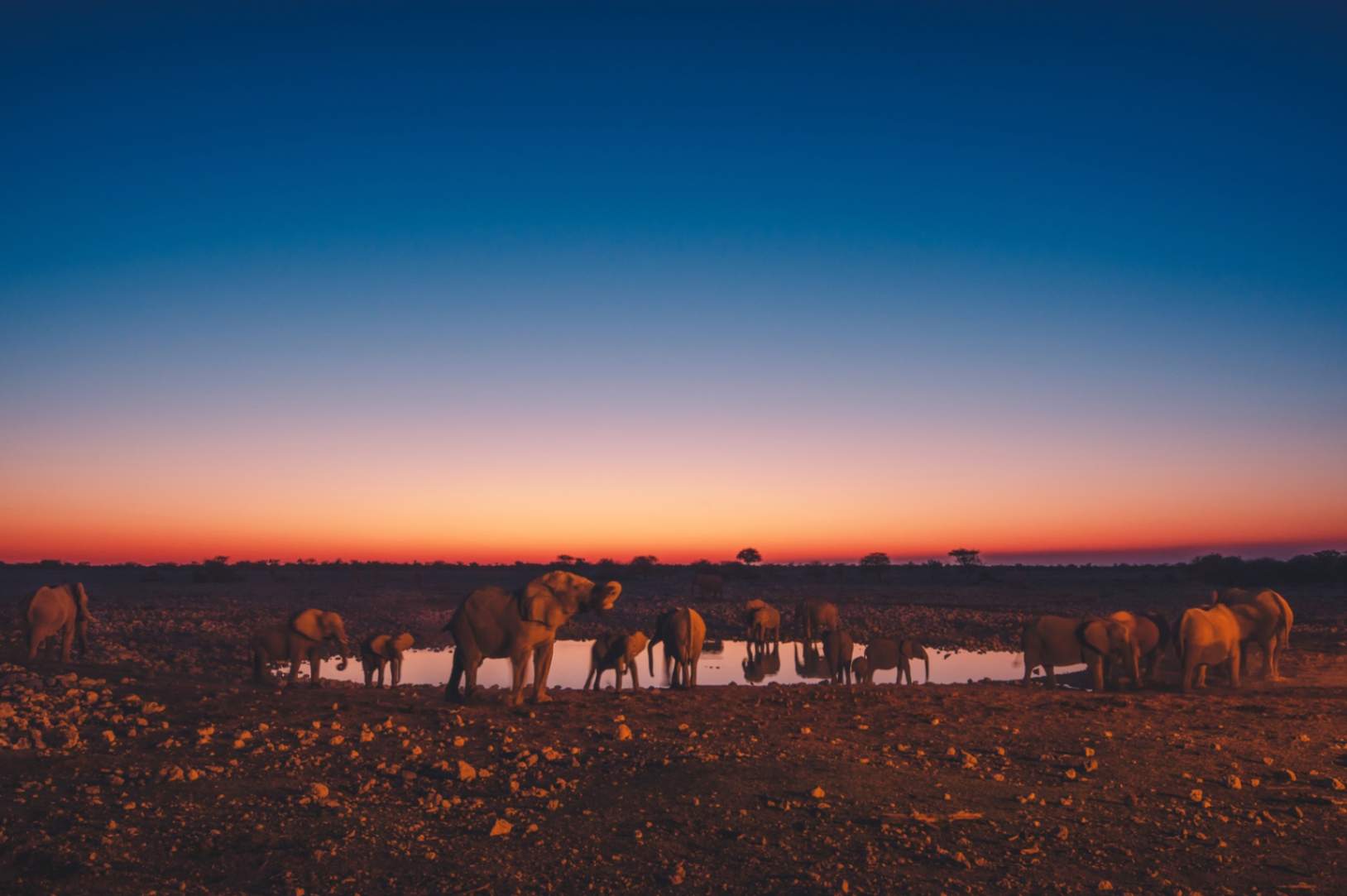
All visitors must be back in camp at sunset, but the show continues at the floodlit Okaukuejo waterhole, a
short walk from the campsite. It offers the chance to see a wide range of wildlife, and is the best opportunity
to get close to a black rhino, a regular visitor here.
Key activities included
- Game drive from Anderson Gate to Okaukuejo
- Afternoon game drive in Etosha
- Floodlit Okaukuejo waterhole
Overnight: Okaukuejo campsite
Etosha National Park
Route: Okaukuejo > Halali > Etosha Pan > Okaukuejo
The day starts at sunrise, when the group meets a local guide at the gate and explores Etosha in an open game viewer. Early morning is a productive time for game viewing and for catching big cats returning from the hunt. Water is scarce in this desert landscape, so the drive takes in as many natural and man-made
waterholes as possible, hoping the animals will come to drink.
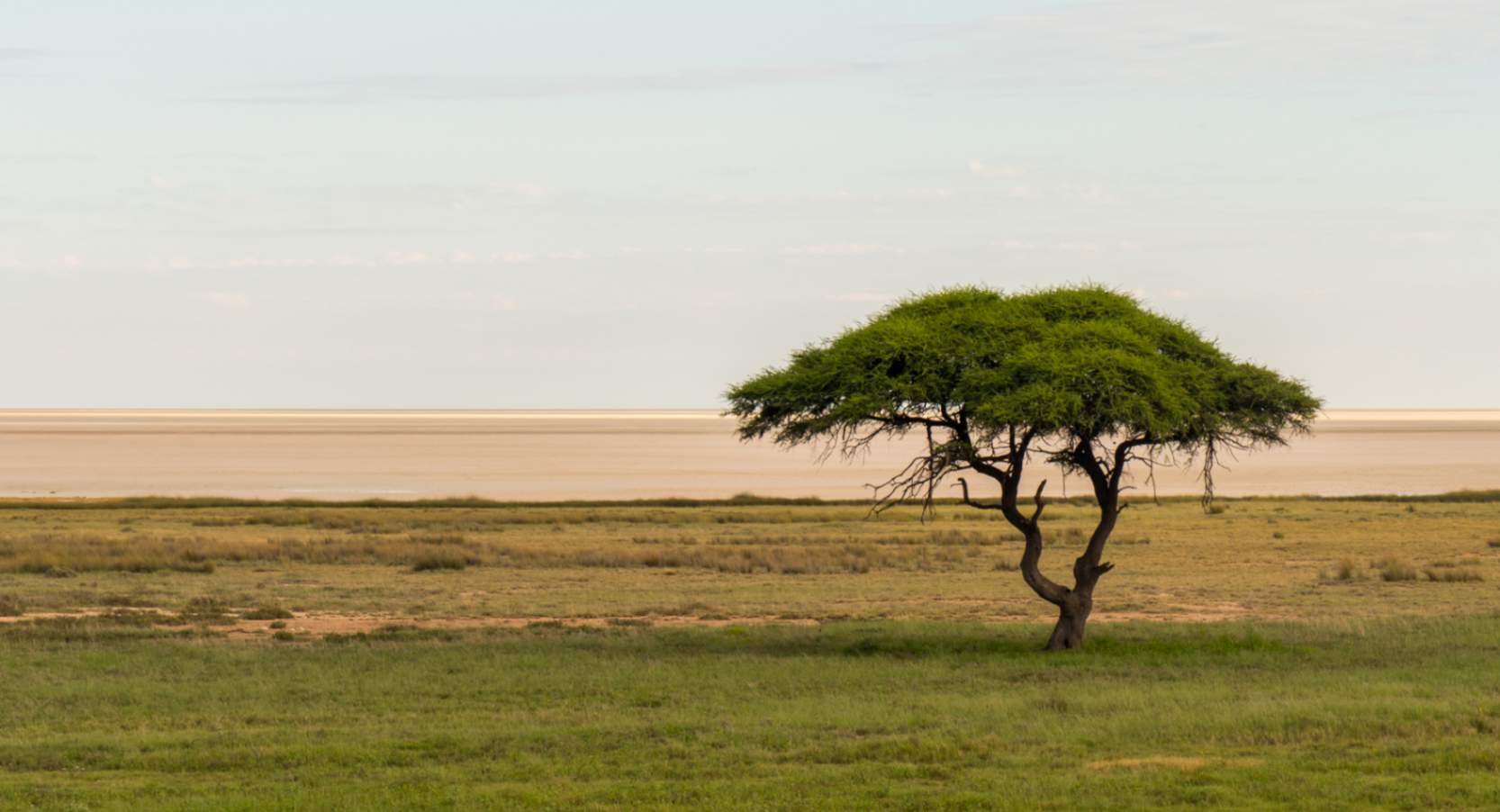
Breakfast is taken at a designated picnic area before the drive continues to Halali camp, named after the bugle call that once signalled the end of a hunt. Lunch is at Halali, where there is a small shop, a pool for a swim and a waterhole to visit. In the afternoon the game drive resumes, with a stop at the Etosha Pan, over 4,700 square km of dazzling white mineral pan, so large it can be seen from space.
The group returns to Okaukuejo just before sunset, in time for the best hour at the waterhole, and spends a second night at the campsite.
Key activities included
- Full-day game drive in an open game viewer with a local guide
- Picnic breakfast
- Halali camp, shop and pool
- Etosha Pan viewing
- Okaukuejo waterhole
Meals: Full Board (B, L, D) Overnight: Okaukuejo campsite
Palmwag
Route: Okaukuejo > Otjikandero Himba Village > Kamanjab > Grootberg Pass > Palmwag
After an early breakfast the group game drives out of Etosha and back to the main road. The first stop is a cultural visit to the Otjikandero Himba Village near Kamanjab, a living village where people still largely follow their traditional culture. The visit is guided, and guests are encouraged to take photos and ask questions.
After a short stop in Kamanjab, the route turns west towards the Etendeka Mountains, the 'flat tops', and the Grootberg Pass. The terrain is covered with small uniform boulders, a legacy of the break-up of Gondwanaland some 180 million years ago, with sweeping views of an ancient landscape.
Palmwag lies beside the Uniab River under waving makalani palms, which often shelter Namibia's unique desert-adapted elephants. They sometimes come close to camp and have been known to drink from the swimming pools. The group sets up camp in the late afternoon and enjoys a sundowner, hoping to see the resident elephant herds.
Key activities included
- Game drive out of Etosha
- Guided visit to Otjikandero Himba Village
- Scenic drive through the Etendeka Mountains and Grootberg Pass
- Sundowner at Palmwag
Meals: Full Board (B, L, D) Overnight: Palmwag campsite
Spitzkoppe
Route: Palmwag > Skeleton Coast National Park > Cape Cross > Spitzkoppe
This is the northernmost point of the trip, and the route heads west to the Atlantic before turning south along the coast. On the way guests see unusual vegetation, including the Welwitschia Mirabilis, Namibia's national plant, some specimens of which are over 1,500 years old. The group enters the Skeleton Coast National Park through the Springbokwasser Gate and meets the chilly Atlantic, a barren coast of forbidding mountains and beaches where many ships were wrecked.
Along the road are remnants of human activity, including the collapsed oil drilling rig and the abandoned diamond plant at Toscanini, relics of failed 1960s ventures. The group exits at the Ugab River crossing with its iconic gates and continues to Cape Cross, home to usually upwards of 100,000 Cape fur seals, in one of the world's largest colonies. Two replica crosses commemorate the Portuguese mariner Diogo Cão, who erected the first here in 1485.
The route then turns inland to the granite Spitzkoppe, renowned for sunrise, sunset and night photography.
After setting up camp, guests go into the mountains for sunset before dinner at camp.
Key activities included
- Welwitschia Mirabilis viewing
- Skeleton Coast National Park drive
- Toscanini oil rig stop
- Cape Cross Seal Colony visit
- Sunset at Spitzkoppe
Meals: Full Board (B, L, D) Overnight: Spitzkoppe campsite
Swakopmund
Route: Spitzkoppe > Henties Bay > Swakopmund
After breakfast and breaking camp, the group heads back to the coast and south along the coast road to Swakopmund. The first stop is the wreck of the fishing trawler Zeila, beached in 2008 south of Henties Bay, which is well placed for photos. Further along, the guide introduces the vast lichen fields of the Skeleton Coast, among the rarest of their kind in the world. Lichen is extremely fragile, so guests walk only where the guide directs.
Tonight there are no tents. The group checks into the centrally located Hotel A La Mer in Swakopmund, a town bounded by the Namib dunes and the Atlantic, with colonial German architecture still on view and German widely spoken. The town centre is small and easy to explore on foot.
Swakopmund offers many optional activities, including scenic flights, skydiving, quad biking, bicycle tours and the popular living desert excursions, and the guide can advise and make bookings. Lunch and dinner are for guests' own account, and the guide can recommend restaurants.
Key activities included
- Zeila shipwreck stop
- Guided visit to the lichen fields
- Free time in Swakopmund
- Optional scenic flights, skydiving, quad biking, bicycle tours and living desert excursions
Meals: Bed & Breakfast (B) Overnight: Hotel A La Mer Swakopmund
Sesriem
Route: Swakopmund > Kuiseb Pass > Gaub Pass > Tropic of Capricorn > Solitaire > Sesriem
The group makes the most of its time at the coast, leaving Swakopmund late in the morning to allow time to wander around town. Optional activities are also available that morning, including sand boarding down the slip face of a dune, which is generally only offered in the morning.
The road leads east across the Namib gravel plains, broken by huge inselbergs, and over two mountain passes: the Kuiseb Pass, dropping steeply into the Kuiseb River canyon, and the smaller Gaub River canyon.
Soon after, the group crosses the Tropic of Capricorn and stops at the signpost for photos. The road continues through desert landscape to the tiny town of Solitaire, famous for its apple pie, and on to Sesriem, the gateway to Sossusvlei.
The group makes camp in the shadow of the towering red dunes of the world's oldest desert, in anticipation of the next day.
Key activities included
- Optional sand boarding in the morning
- Kuiseb Pass and Gaub canyon
- Tropic of Capricorn photo stop
- Stop at Solitaire
Meals: Full Board (B, L, D) Overnight: Sesriem campsite
Sesriem
Route: Sesriem > Dune 45 > Sossusvlei > Sesriem Canyon > Sesriem
A pre-dawn start brings the group to Dune 45, where guests climb to a vantage point to watch the dunes change colour at sunrise, glowing orange and apricot red on one side and in shadow on the other. After a quick breakfast, the group continues to the car park, where 4x4 shuttle vehicles carry them along the ancient Tsauchab River-bed into Sossusvlei.
Guided on foot, guests visit Dead Vlei, an ancient pan dotted with skeletal camel thorn trees over 1,000 years old. There is time to explore and to climb one of the highest dunes in the world, with breathtaking views.
The group returns to Sesriem for lunch and perhaps a dip in the pool. In the afternoon a short excursion visits Sesriem Canyon, carved by the Tsauchab River, where guests can walk into the cooler river-bed. In the late afternoon there is an option to visit Elim Dune for golden light before sunset, with a walk back through the desert to camp.
Key activities included
- Sunrise at Dune 45
- 4x4 shuttle to Sossusvlei
- Guided walk at Dead Vlei
- Dune climb
- Sesriem Canyon walk
- Optional Elim Dune sunset
Meals: Full Board (B, L, D) Overnight: Sesriem campsite
Aus
Route: Sesriem > Aus > Klein Aus Vista
Today's scenic drive continues south through ever-changing desert scenery, mountains and open grassland.
The destination is the tiny community of Aus in the Aus Mountains above the Namib plains, once the site of a prisoner of war camp built to house German prisoners during the Second World War.
The group stays at Klein Aus Vista, just outside Aus and just inside the private Gondwana Sperrgebiet Rand Park. Arriving in the early afternoon, guests set up camp and have time to stretch their legs on the unguided hiking trails on the property.
The landscape is one of wide open vistas, and the hope is for a spectacular sunset to end the day.
Luderitz
Route: Klein Aus Vista > Kolmanskop > Luderitz > Diaz Point > Klein Aus Vista
An early start brings a drive on a sealed tar road through grasslands and wide open desert towards the ocean. Along the way guests watch for the desert-adapted wild horses of the area, whose origins remain open to speculation.
The first stop is the ghost town of Kolmanskop, founded in 1908 as a diamond mine and built in the style of a German village, with a hospital that had the first x-ray machine in the Southern Hemisphere, a power station, school, ballroom and ice factory. Abandoned as the diamonds ran out, it is slowly being reclaimed by the desert, and guests enjoy a guided tour and photography.
The group then reaches Luderitz, known for its colourful colonial-style buildings, and drives out onto the peninsula to Diaz Point, where Bartolomeu Diaz erected a stone cross in 1487. Luderitz remains one of the windiest places on earth. The group returns to Klein Aus Vista, with another chance to see the desert horses, in time for a sundowner.
Keetmanshoop
Route: Klein Aus Vista > Fish River Canyon > Keetmanshoop > Quiver Tree Forest
The first part of the morning follows the tar road before the group turns south to the Fish River Canyon in the /Ai-/Ais Richtersveldt Transfrontier National Park. Entering at the Hobas gate, guests go to the main lookout, with views over Hell's Bend, a huge meander of the Fish River. The canyon is second in size only to the Grand Canyon, long, up to wide and in places 550 m deep.
The journey then turns north to Keetmanshoop, the main commercial and political centre of the south, for a short stop, before continuing to the overnight camp in the Quiver Tree Forest. The quiver tree, Namibia's national tree, is actually an aloe, and takes its name from the San people's use of its bark to make quivers. The forest holds around 250 of these plants, the oldest about 200 years old.
The rustic campsite lies within the forest, giving a stunning sunset and the opportunity for night photography. On the last night of the safari the group reflects on the adventure around the camp-fire.
Windhoek
Route: Quiver Tree Forest > Mariental > Rehoboth > Windhoek
The group heads north to Windhoek on the main tar road for the whole journey, with no gravel road to contend with. Along the way there are interesting places to note. Some distance past Keetmanshoop, a tall peak can be seen in the distance to the west: Brukkaros, an unusual steam-formed volcano whose collapsed caldera measures across. It is too far away to be included in the itinerary but is an interesting landmark.
Further on, a signpost points to Gibeon, also too distant to visit, where a prehistoric meteor strike scattered fragments of solid metal across the countryside. Gibeon meteorites can be seen in a public display at Post Street Mall in Windhoek city centre, for those with time after the safari.
The journey passes through the small centres of Mariental and Rehoboth, with a stop along the road for a light lunch. The group aims to be back in Windhoek in the late afternoon, and a shuttle takes guests to their accommodation within the city limits. Departure flights are not recommended for this day.
Cost
The Cost Includes
- Transport in a custom-built safari vehicle with air-conditioning and charging ports
- Services of a professional English-speaking guide & camp assistant
- 10 nights camping + 1 night's accommodation in twin share rooms with en-suite bathrooms
- Camping equipment (excluding sleeping bag, which can be hired)
- Meals as per itinerary (B - breakfast, L - lunch, D - dinner)
- Tap water
- National Park entry fees
- Game drive at Mt Etjo and Okonjati Nature Reserve
- Half day game drive in Chameleon Safaris vehicle in
- Etosha National Park
- Full-day game drive in Etosha National Park in an open
- game viewer
- Himba Village visit
- Visit to Cape Cross Seal Colony
- Spitzkoppe
- Guided excursion to Sossusvlei including 4x4 shuttle
- Guided tour at Kolmanskop
- Visit to Diaz Point
- Visit to Fish River Canyon viewpoint
- Visit to Quiver Tree Forest
- Return airport transfers to and from Windhoek International Airport
- #
The Cost Excludes
- All drinks
- Snacks between meals
- Optional Activities
- Sleeping bags
- Tips
- Items of personal nature
- Single travellers will be matched with another traveller of the same sex on a twin share basis